← JournalSocial Media Training20 August, 2026 · 6 min read

Why AI-Powered Social Media Training is Essential for Your Workforce

Unlock your team's potential with AI-powered social media training. Learn how to protect your brand, boost ROI, and ensure legal compliance in the AI era.…

Share
Why AI-Powered Social Media Training is Essential for Your Workforce
Web Media University

Social media training is crucial for any business, teaching employees to use platforms like LinkedIn and TikTok responsibly to protect the brand and drive growth. AI-powered training specifically prepares your team for modern challenges, ensuring they can leverage new tools for marketing, avert AI-driven security risks, and maintain a consistent, positive brand voice online.

Key Takeaways:

  • Mitigate Risks: Training is your first line of defense against brand reputation damage, legal issues from misuse of copyrighted content, and cybersecurity threats like deepfake scams.
  • Boost Performance: Empower employees to become effective brand advocates, using AI tools to create engaging content, generate leads, and contribute directly to marketing and sales ROI.
  • Ensure Consistency: A formal program ensures every employee understands the company’s brand voice, crisis communication protocols, and content policies, creating a unified presence.
  • Improve Productivity: Structured training teaches employees to use social media efficiently for professional tasks, leveraging AI for content creation and scheduling while avoiding common time-wasting pitfalls.

Why is Social Media Training a Company Necessity, Not a Perk?

In today's digital-first world, every employee is a potential spokesperson for your brand. A single uninformed post can trigger a viral backlash, while a well-trained team can become a powerful engine for growth. AI-powered social media training is no longer a luxury—it's a fundamental component of modern risk management and marketing strategy. It equips your workforce to navigate the complexities of online engagement, protecting your brand's reputation while empowering them to contribute to its success.

Expert Commentary: "We've shifted from viewing social media as a siloed marketing function to seeing it as an enterprise-wide communication channel. When every employee with a LinkedIn profile can influence brand perception, failing to provide structured training is a direct threat to brand integrity. AI's ability to both create and debunk misinformation makes this training more critical than ever." — Michelle Hummel, CEO of Web Media University

How Does Training Protect Your Brand's Reputation?

One employee's misstep can quickly escalate into a full-blown PR crisis. Training establishes clear guardrails, ensuring employees understand the do's and don'ts of posting, whether on official company channels or personal accounts. It covers essential topics like maintaining a professional tone, avoiding confidential information leaks, and understanding the permanent nature of online content. This proactive education minimizes the risk of costly reputational harm.
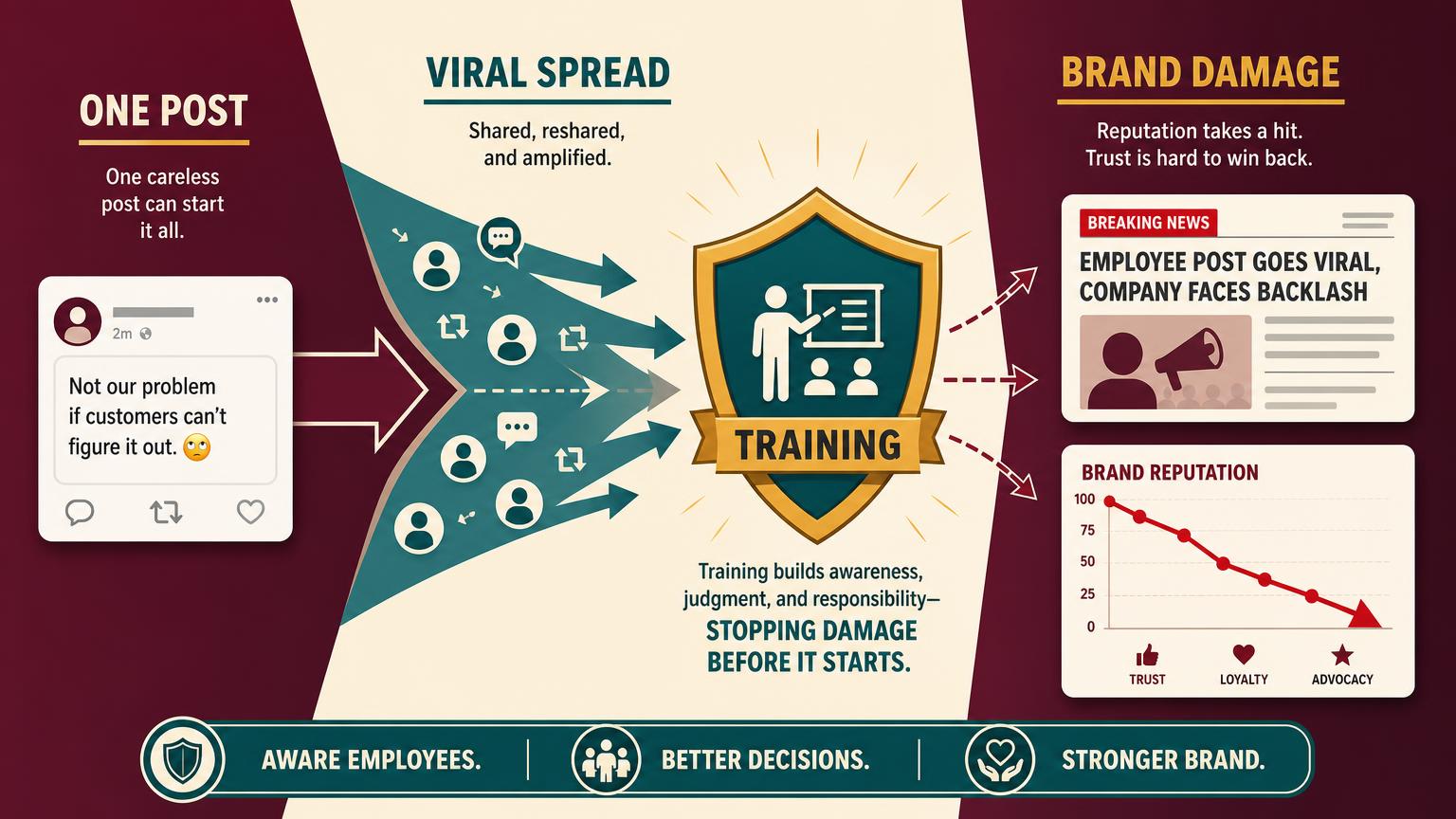
[Image: A screenshot of a fictional negative tweet going viral, with a callout box explaining how training could have prevented it. Alt-text: A diagram showing how a single negative employee tweet can spiral into widespread negative media coverage, damaging a brand's reputation and stock price.]

How Can Employees Become Powerful Brand Advocates?

Trained employees can transform into your most authentic and effective brand advocates. A structured program teaches them how to share company news, industry insights, and positive experiences in a way that feels genuine and aligns with your brand voice. By equipping them with AI-powered content creation tools like Jasper or Lately and clear guidelines, you multiply your marketing team's efforts, expanding organic reach and building trust with their professional networks on platforms like LinkedIn.

What Makes a Brand Voice Strong and Consistent Online?

Consistency across all touchpoints is the bedrock of a strong brand. Social media training ensures that every employee—from sales and support to HR and engineering—understands and can apply your company’s unique voice and tone. Whether they are answering a customer question on X (formerly Twitter), posting a project update on LinkedIn, or creating a video for TikTok, this unified approach builds brand trust and reinforces your identity.


Area Before Training After Training
Customer Support Inconsistent, often informal responses. Professional, empathetic, and on-brand replies.
Sales Outreach Generic, sales-heavy LinkedIn messages. Personalized, value-driven outreach that builds relationships.
Content Sharing Shares company posts without context. Adds personal insights that drive engagement and conversation.

Social media is fraught with legal and security risks that untrained employees can easily miss. A comprehensive training program is essential for compliance and data protection.

Can We Be Sued for an Employee's Post?

Yes. Without proper guidance, employees can unknowingly violate copyright laws by using unlicensed images, breach advertising standards with unsubstantiated claims, or run afoul of data privacy regulations like GDPR. Training covers these legal fundamentals, ensuring all online communication is compliant and protecting your company from fines and litigation. It’s crucial to educate staff on using royalty-free assets or company-licensed AI image generators to avoid copyright infringement.

How Do We Prevent Security Breaches via Social Media?

Cybercriminals increasingly use social engineering and AI-powered deepfakes on social platforms to trick employees into revealing sensitive information. Training helps your team recognize and report potential threats, such as phishing attacks disguised as direct messages or deepfake videos of executives making false announcements. This security awareness is a critical layer of defense for safeguarding company data and systems.

How Does Social Media Training Boost Marketing and Sales ROI?

When employees are trained in social media strategy, they become a direct extension of your marketing and sales departments. They learn to identify and engage prospects on LinkedIn, share content that drives traffic and conversions, and use their platforms to build a professional brand that reflects positively on the company. This "social selling" approach turns their everyday online activity into a measurable source of leads and revenue.

3 Steps to Turn Your Team into a Social Selling Force

  1. Foundational Training: Teach the core principles of your brand voice, content strategy, and compliance guidelines.
  2. Platform-Specific Skills: Provide specialized training for key platforms, such as optimizing a LinkedIn profile or creating engaging Instagram Reels.
  3. Tool Empowerment: Equip them with and train them on AI-powered tools for content scheduling (e.g., Buffer), content creation (e.g., Jasper), and analytics (e.g., Sprout Social) to maximize efficiency and impact.

What Are the Signs of a Positive Online Company Culture?

A strong social media policy, reinforced by training, is the foundation of a positive and inclusive online culture. When employees understand the expectations for respectful communication, they are better equipped to foster constructive dialogue and represent the company’s values. This creates a supportive environment that extends from internal Slack channels to public-facing social media platforms.

Checklist for a Positive Online Culture:

  • Employees share company successes and celebrate colleagues' achievements publicly.
  • Online interactions (internal and external) are consistently respectful and professional.
  • Employees feel confident and empowered to engage in industry conversations.
  • The company’s social media channels reflect a diverse and inclusive range of voices.
  • There is a clear, non-punitive process for reporting and correcting online mistakes.

Frequently Asked Questions (FAQ)


Invest in your team’s success and safeguard your brand’s future. At Web Media University, our AI-enhanced certification programs are designed to equip your employees with the modern skills needed to excel.

Ready to build a stronger, safer brand? Explore our AI Marketing Certification programs or book a free assessment call to discuss your team's training needs.


Authored by Michelle Hummel, CEO of Web Media University and a leading expert in digital marketing, franchise growth, and AI integration for workforce development.

Frequently asked questions

Answers to the questions readers ask most

What is the primary goal of employee social media training?

The primary goal is to protect the company's brand and reputation by teaching employees how to use social media responsibly and effectively. It also aims to empower them to become brand advocates, ensure legal compliance, and enhance the company's overall marketing and sales efforts.

How does social media training impact company security?

Training educates employees on cyber threats prevalent on social media, such as phishing, social engineering, and AI-driven deepfakes. It teaches them to recognize and report suspicious activity, avoid sharing sensitive information, and adhere to security protocols, significantly reducing the risk of a data breach.

Can social media training really increase sales?

Yes. Training in 'social selling' techniques equips sales and other employees to use platforms like LinkedIn to identify prospects, build relationships, and share content that generates qualified leads. This turns their social media presence into a measurable channel for revenue generation and contributes directly to ROI.

Isn't a social media policy document enough?

While a policy document is a necessary foundation, it is not sufficient on its own. Active training ensures that employees truly understand the guidelines, can apply them to real-world scenarios, and stay current with rapidly evolving platforms and AI tools. Training bridges the gap between policy and practice.

Share
Michelle Hummel, founder of Web Media University

About the author

Michelle Hummel

CEO of Web Media University and Web Strategy Plus · Author of the four-book series The Social Media Magnet

Michelle Hummel is a Certified AI Integration Specialist and Certified Social Media Marketing Strategist, AI marketing educator, and digital growth expert who has trained thousands of business owners, franchise teams, and marketing professionals.

Through her award-winning agency, Web Strategy Plus, she helps businesses and franchise brands implement AI-powered marketing, SEO, content, and lead-generation systems.

Build with Michelle in real time. Learn AI. Grow faster. Join the fastest-growing AI business community, where entrepreneurs learn AI, build real businesses, access exclusive tools, earn certifications, and connect with like-minded professionals.

Next step for Social Media readers