← JournalPersonal Branding Tips20 August, 2026 · 6 min read
AI in Marketing: 7 Winning Strategies for 2026
Discover 7 AI-powered marketing strategies top brands are using in 2026 to drive growth. Learn how to leverage AI for SEO, content, and more. Get started today.
#AI Marketing
#AEO
#SEO
#Social Media Marketing
#AI Workforce
#Leadership
Share
AI in marketing is the use of artificial intelligence technologies to make automated decisions for improving marketing outcomes. By analyzing data and identifying trends, AI helps businesses enhance customer experiences, optimize campaigns, and achieve higher ROI, forming the backbone of modern, data-driven strategies.
Key Takeaways:
AI is not just a trend but a fundamental shift in marketing, automating and optimizing tasks from content creation to customer segmentation.
Leveraging AI for SEO (AEO) and content personalization are critical for visibility and engagement in 2026.
Generative AI tools like ChatGPT and Gemini are essential for creating high-quality content, images, and videos at scale.
Hyper-personalization through AI-driven analytics leads to more effective email campaigns and higher conversion rates.
AI-powered influencer marketing platforms help identify and manage authentic partnerships for better ROI.
What is AI-Powered Marketing?
AI-powered marketing involves using artificial intelligence and machine learning algorithms to automate and enhance marketing efforts. It analyzes vast amounts of data from sources like your CRM, website analytics, and social media to uncover insights, predict consumer behavior, and automate tasks. This allows marketers to move from broad-stroke campaigns to highly personalized, real-time interactions with their audience. Key technologies include Generative AI for content creation, predictive analytics for forecasting trends, and Natural Language Processing (NLP) for understanding customer sentiment.
Expert Commentary by Michelle Hummel: "We've moved past the question of if we should use AI in marketing. In 2026, it's about how we use it to create genuine connections. The winners will be those who use AI to understand their customers on a deeper level and deliver value at every touchpoint, not just to automate old processes."
How is AI Changing SEO and Content Strategy?
AI is fundamentally reshaping Search Engine Optimization (SEO) into what is now often termed AI-Enhanced Optimization (AEO). Instead of just matching keywords, search engines now prioritize content that directly and comprehensively answers user questions. AI tools are crucial for modern content strategy. For instance, tools like SurferSEO or MarketMuse use AI to analyze top-ranking content and provide data-driven recommendations for optimizing your own.
Key AI applications in SEO include:
Generative AI for Content: Using models like GPT-4 or Gemini to draft articles, create meta descriptions, and generate topic ideas.
Predictive Keyword Analysis: Identifying emerging trends and search terms before they become highly competitive.
Automated Technical SEO Audits: AI-powered crawlers like Sitebulb or Screaming Frog can identify site issues like broken links or slow page speed much more efficiently than manual checks.
How Can AI Improve Social Media Engagement?
AI supercharges social media marketing by automating content scheduling, analyzing audience engagement, and personalizing ad delivery. Platforms now use sophisticated algorithms to determine the best times to post for maximum visibility. AI tools can analyze comments and messages to gauge brand sentiment, allowing for proactive community management.
Then: Manually posting content daily.
Now (2026): Using AI platforms like Buffer or Later which leverage AI to determine optimal posting times and even suggest content based on performance data.
What Are AI-Powered Steps for Hyper-Personalization?
Hyper-personalization uses AI to deliver marketing messages tailored to an individual's behavior, preferences, and real-time needs. This goes far beyond using a customer's first name in an email. AI-driven platforms can dynamically change website content, recommend products based on browsing history, and send triggered messages that are highly relevant to a user's recent actions.
Here are 3 steps to implement hyper-personalization:
Free toolkit
Get AEO Visibility Checklist
42 checks that decide whether AI search engines quote your brand. Unlocks instantly — plus one practical seo & aeo play each week. No fluff, unsubscribe anytime.
Integrate Your Data: Use a Customer Data Platform (CDP) like Segment to unify user data from all touchpoints (website, app, email, social) into a single customer view.
Leverage AI for Segmentation: Apply machine learning models to segment your audience based on predictive traits, such as likelihood to churn or lifetime value, rather than just simple demographics.
Deploy Personalized Campaigns: Use marketing automation tools like HubSpot (which has integrated AI features) to create automated workflows that deliver personalized content, product recommendations, and offers across email, web, and social channels based on your AI segments.
How Does AI Help Find the Right Influencers?
Finding authentic influencers who align with your brand is a major challenge. AI-powered influencer marketing platforms have replaced manual searching by analyzing millions of creator profiles. These platforms vet influencers based on audience demographics, engagement rates, and past performance, ensuring a better brand fit and a higher return on investment.
Feature
Manual Vetting (The Old Way)
AI-Powered Platforms (The 2026 Way)
Discovery
Searching hashtags, relying on recommendations
Data-driven search with 50+ filters (audience, location, etc.)
Authenticity Check
Eyeballing follower counts and comments
AI analysis of follower health, engagement pods, and fraud detection.
ROI Prediction
Guesswork based on follower size
Predictive analytics on campaign performance based on past data.
Tools
Google Sheets, Instagram DMs
Grin, Upfluence, Aspire.io
What is the Role of Generative AI in Marketing?
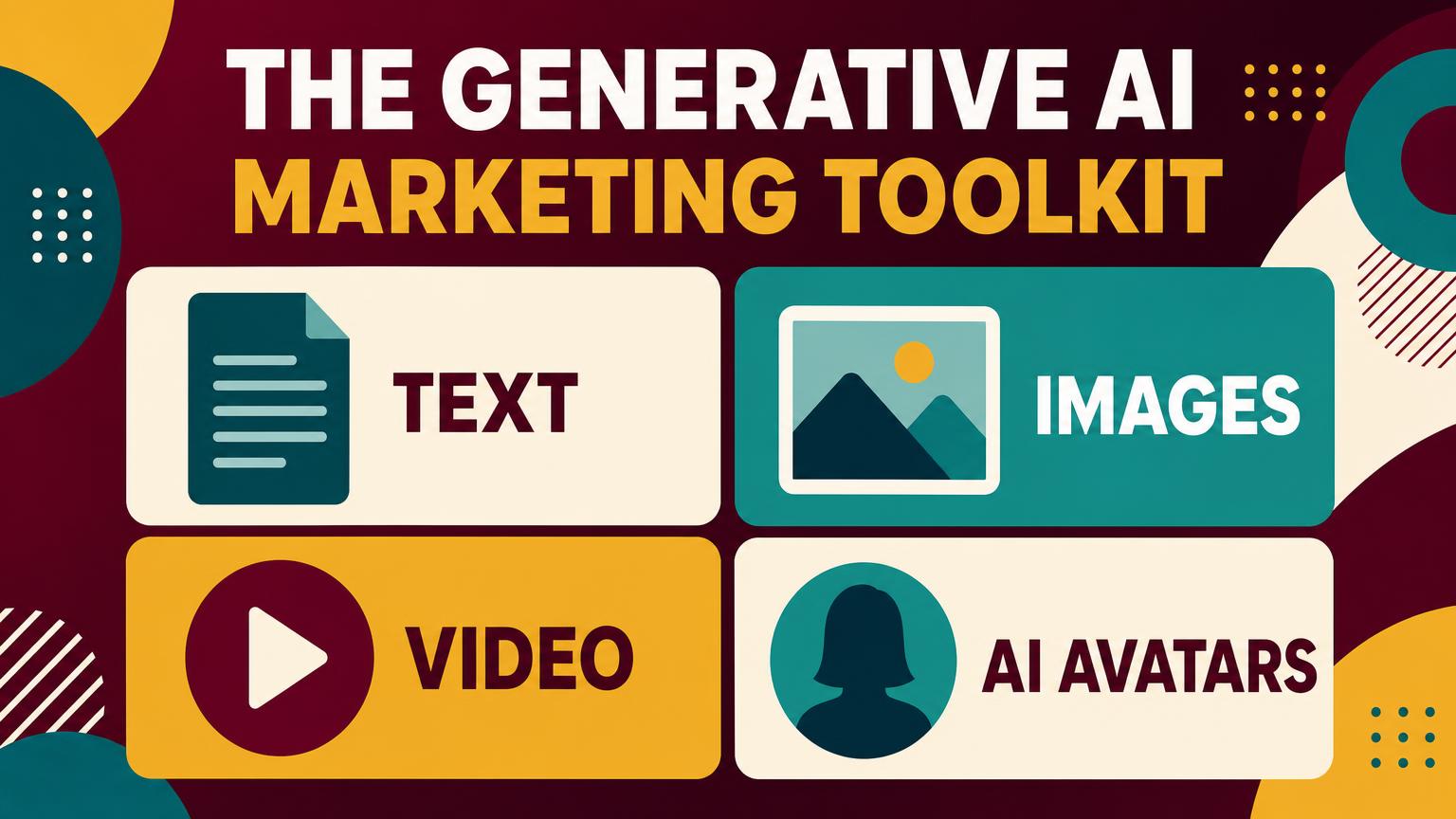
Generative AI refers to artificial intelligence capable of generating new content, including text, images, video, and audio. For marketers, this technology is a game-changer. Tools like Midjourney and DALL-E 3 can create stunning visuals for campaigns in seconds, while ChatGPT can draft ad copy, blog posts, and email sequences. This dramatically reduces production time and costs, allowing teams to test more creative ideas faster.
The generative AI marketing toolkit: text, images, video, and AI avatars.
What are the Best AI Marketing Tools for 2026?
Choosing the right tools depends on your specific goals, but a modern AI marketing stack typically includes solutions for analytics, content creation, and automation. Here is a checklist of capabilities to look for:
AI-Powered SEO & Content Analysis: (e.g., MarketMuse, SurferSEO)
Generative AI for Text & Copy: (e.g., Jasper, ChatGPT, Gemini)
Generative AI for Images & Video: (e.g., Midjourney, RunwayML)
AI-Powered Analytics & Customer Data Platform (CDP): (e.g., Segment, Mixpanel)
AI for Social Media Management: (e.g., Buffer, Later with AI features)
Frequently Asked Questions (FAQ) about AI in Marketing
Q: Will AI replace marketing jobs?
A: AI is more likely to augment marketing roles rather than replace them. It automates repetitive tasks, freeing up marketers to focus on strategy, creativity, and building human connections—skills where humans still excel.
Q: What is the difference between AI marketing and marketing automation?
A: Marketing automation typically follows pre-programmed rules (e.g., "if a user does X, send email Y"). AI marketing is more advanced; it uses machine learning to analyze data, make predictions, and adapt its actions to optimize for a specific goal without being explicitly programmed for every scenario.
Q: How can a small business start with AI marketing?
A: Small businesses can start by using the AI features already built into platforms they use, like HubSpot's AI content assistant or the analytics in Google Analytics 4. Experimenting with a generative AI tool like ChatGPT for content ideas is another low-cost, high-impact starting point.
Michelle Hummel is a leading AI marketing strategist and the founder of Web Media University, where she empowers entrepreneurs and marketing professionals to leverage AI for business growth. To build your own AI-powered marketing strategy, explore our AI Marketing Certification Program or book a complimentary marketing assessment call.
Frequently asked questions
Answers to the questions readers ask most
Will AI replace marketing jobs?
AI is more likely to augment marketing roles rather than replace them. It automates repetitive tasks, freeing up marketers to focus on strategy, creativity, and building human connections—skills where humans still excel.
What is the difference between AI marketing and marketing automation?
Marketing automation typically follows pre-programmed rules (e.g., 'if a user does X, send email Y'). AI marketing is more advanced; it uses machine learning to analyze data, make predictions, and adapt its actions to optimize for a specific goal without being explicitly programmed for every scenario.
How can a small business start with AI marketing?
Small businesses can start by using the AI features already built into platforms they use, like HubSpot's AI content assistant or the analytics in Google Analytics 4. Experimenting with a generative AI tool like ChatGPT for content ideas is another low-cost, high-impact starting point.
Share
Free toolkit
Get AEO Visibility Checklist
42 checks that decide whether AI search engines quote your brand. Unlocks instantly — plus one practical seo & aeo play each week. No fluff, unsubscribe anytime.
About the author
Michelle Hummel
CEO of Web Media University and Web Strategy Plus · Author of the four-book series The Social Media Magnet
Michelle Hummel is a Certified AI Integration Specialist and Certified Social Media Marketing Strategist, AI marketing educator, and digital growth expert who has trained thousands of business owners, franchise teams, and marketing professionals.
Through her award-winning agency, Web Strategy Plus, she helps businesses and franchise brands implement AI-powered marketing, SEO, content, and lead-generation systems.
Build with Michelle in real time. Learn AI. Grow faster. Join the fastest-growing AI business community, where entrepreneurs learn AI, build real businesses, access exclusive tools, earn certifications, and connect with like-minded professionals.



 The generative AI marketing toolkit: text, images, video, and AI avatars.